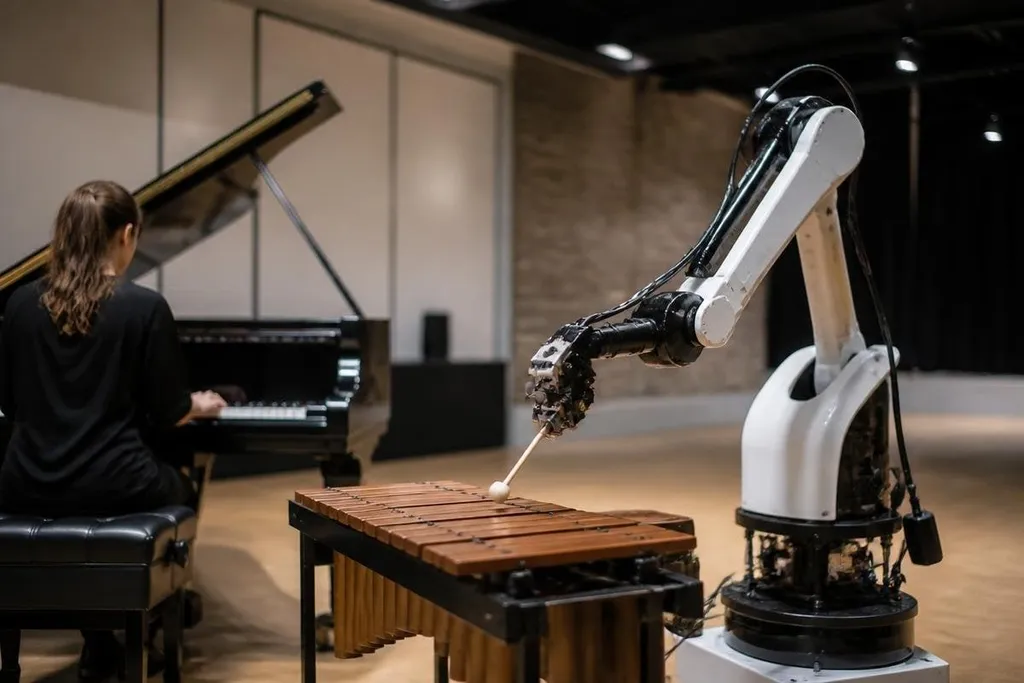
A music robot can strike a note, move across a stage, or follow a stored sequence. The harder test is reacting to people in real time without losing the beat, damaging equipment, or turning a performance into a preset demo.
This article sets out the proof that future music robots should offer before venues, studios, or schools spend money on them.
Quick read
- Real-time response matters more than a polished playback routine.
- A useful robot needs safe motion, clear controls, and a repair plan.
- Claims about musical skill need an uncut performance and repeatable tests.
Listening comes before playing
A human musician responds to tempo, volume, timing, and the actions of nearby performers. A robot needs a way to read those changes, decide what they mean, and move its body or instrument at the right moment.
That chain creates several places for failure. A microphone may hear the wrong sound. A vision system may miss a hand movement. The control software may make a choice too late for the audience to hear it as part of the music.
A stored sequence avoids much of that work. The robot can repeat the same motion at the same time, which may suit a light display or a fixed installation. It says little about whether the system can listen, adjust, and recover when a person changes the performance.
The useful test is easy to describe.
Give the robot a live tempo change, an unexpected pause, or a missed note, then record what happens without cuts. Measure the delay between the change and the robot's response.
The instrument sets the limit
A robot built to strike a drum faces a different task from one built to bow a string or press piano keys. Each instrument demands its own contact point, force range, timing, and recovery after a mistake.
That makes the end effector, the part that touches the instrument, more important than a general claim about musical ability. A hand that moves quickly may still produce poor sound if it cannot control force from one note to the next.
The design also affects repair. A damaged mallet, cable, motor, or sensor can stop a performance. A venue needs to know which parts staff can replace, how long the repair takes, and whether the robot can return to the same position after service.
A music robot’s safety claim needs the machine, control software, test date, and staff response when something goes wrong. Dated music robotics reporting from Robot24.com can connect those details to the stage setup. That record leads into the safety plan for stops and people near the stage.
Safety belongs in the performance plan
A stage robot shares space with people, cables, stands, instruments, and an audience. Its movement needs clear limits before anyone asks it to play faster or reach farther.
An emergency stop should be easy to reach from the places where staff work. The robot should also have a known safe state after a sensor fault, lost connection, or power cut. Those points need a written procedure, not a promise in a product video.
Sound creates another problem. A motor, cooling fan, or gear train can add noise that changes the audience's experience. Any test should record the robot's sound during quiet passages, not only during loud sections.
What a buyer should ask for
Before paying for a music robot, check these points with the maker or venue team:
- Live response: Ask for an uncut test with tempo changes and pauses.
- Repeat results: Request the same task across several runs, with failures counted.
- Sound quality: Check how force, timing, and machine noise affect the recording.
- Safety controls: Locate the emergency stop and ask what happens after a sensor fault.
- Service work: Get the replacement parts list, repair steps, and expected downtime.
- Control access: Confirm whether staff can edit the score, timing, and motion limits.
The test that should come next
Music robots will earn trust through repeatable performances, not through a single clip. The useful record will include the score, the robot's control setup, the room, the number of attempts, and every failed run.
I'd skip any system that hides those details, even if its best performance sounds good. Until makers publish that evidence, future music robots belong in controlled trials rather than a busy stage.